
Zakat al Fitr: Amount, Rules & When to Pay
Zakat al-fitr rules: how much to pay per person, who pays and who receives it, the deadline before the Eid prayer, and how it differs from zakat al-mal.
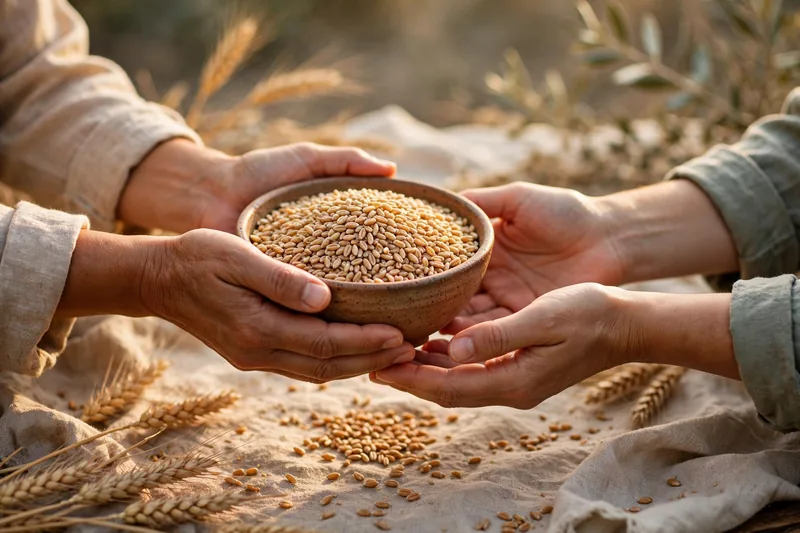
Zakat al fitr is the charity every fasting Muslim pays at the end of Ramadan, before the Eid prayer. It is also called fitrana or sadaqat al-fitr. Unlike the yearly zakat on wealth, this one is tied to the person, not the bank account: the head of each household pays it for every member of the family, including children and newborns. This guide explains what it is, how much to pay, who pays and who receives, the deadline, and how it differs from zakat al-mal.
What Is Zakat al Fitr?
Zakat al-fitr is an obligatory charity due at the end of Ramadan. Its wisdom is twofold. First, it purifies the fasting person from any idle talk or shortcomings during the month, like a final polish on the fast. Second, it makes sure the poor can celebrate Eid with dignity, with food on the table on the morning of the festival. The Prophet (peace be upon him) made it obligatory on every Muslim, young and old, male and female, free and slave, as narrated in Sahih al-Bukhari. The charity is meant to reach the poor before they head out for the Eid prayer, so no one is left hungry on the day of celebration.
This is why zakat al-fitr is due on the person, not on wealth. Even a family of modest means pays it, as long as they have enough for the day. The head of the household pays on behalf of everyone under their care, including a baby born before sunset on the last day of Ramadan.
How Much Is Zakat al-Fitr?
The Prophet (peace be upon him) fixed the amount as one sa' of staple food, as narrated in Sahih al-Bukhari. A sa' is a traditional measure equal to about 2.5 to 3 kilograms (roughly 5 to 7 pounds) of the local staple: wheat, rice, dates, barley, or similar food. In the United States, most people pay the cash equivalent instead, which scholars widely allow because it is easier for charities to distribute and for the poor to use.
The fitrana amount in cash changes slightly each year with food prices. In the US, mosques and charities typically announce a figure of about ten to fifteen dollars per person. Check your local mosque's announcement each Ramadan, since it reflects current local food costs. Some national charities publish their own figure. Whatever the announced amount, it is per person: a family of five pays five shares.
Paying a little more than the minimum is fine and often wise, since food prices vary and generosity is rewarded. What matters is that the intention is zakat al-fitr and that it is paid on time.
Who Pays and Who Receives?
Who pays: every Muslim who has enough provision for themselves and their dependents on the day of Eid. The head of the household pays for every dependent: spouse, children, elderly parents in their care, and even a newborn. A wife or adult child with their own means may pay their own, but the head of household covering everyone is the common practice.
Who receives: the poor and needy. The majority of scholars say zakat al-fitr goes to the same eight categories of recipients as zakat al-mal, with the poor and needy first in line. In practice in the US, this means:
- Local families in need, identified by the mosque's zakat committee
- Trusted Islamic charities that distribute food or cash before Eid
- Food banks and relief programs run by Muslim organizations
Do not give it to the wealthy, to non-Muslims (according to the majority view), or to those you are already obligated to support, such as your own dependents. When in doubt, route it through your mosque's zakat committee. They verify recipients and handle the timing, which leads to the most important rule of all.
When to Pay Zakat al-Fitr
Timing is the heart of this charity. The Prophet (peace be upon him) ordered that it be paid before the people go out to the Eid prayer, as narrated in Sahih al-Bukhari. Charity given before the prayer counts as the accepted zakat al-fitr. Charity given after the prayer counts as ordinary charity, and the obligation remains unfulfilled in its proper form.
To be safe, most scholars allow paying it a day or two before Eid, and many mosques collect it during the last ten nights of Ramadan so they can buy and distribute food in time. Some allow paying from the start of Ramadan. The practical plan for 2027:
- Best: pay during the last few days of Ramadan, ideally before the 29th night, through your mosque or a trusted charity.
- Latest acceptable: before you leave for the Eid prayer on the morning of Eid al-Fitr (expected March 9, 2027). See our Eid al-Fitr 2027 guide for prayer details.
- Too late: after the Eid prayer. It still counts as charity, but not as zakat al-fitr in its proper time.
Set a reminder for the final week of Ramadan. Every year, people remember at the Eid prayer itself, when it is already too late to count properly.
Zakat al-Fitr vs Zakat al-Mal: The Difference
People often mix these up because both are called zakat. They are separate obligations with different rules:
- What triggers it: zakat al-fitr is triggered by the end of Ramadan and is due per person. Zakat al-mal is triggered by owning wealth above the nisab threshold for a full lunar year.
- Amount: zakat al-fitr is one sa' of food (or its cash value, about ten to fifteen dollars in the US) per person. Zakat al-mal is 2.5 percent of qualifying wealth.
- Who pays: zakat al-fitr is paid by or for every Muslim, rich or poor, as long as they have enough for the day. Zakat al-mal is paid only by those whose wealth reaches the nisab.
- When: zakat al-fitr is due at the end of Ramadan, before the Eid prayer. Zakat al-mal is due once a lunar year has passed on the wealth, at any time of year.
- Purpose: zakat al-fitr purifies the fast and feeds the poor on Eid morning. Zakat al-mal purifies wealth and supports the poor year-round.
Paying one does not cover the other. If you owe zakat al-mal, calculate and pay it separately according to its own rules.
Frequently Asked Questions

Check Today's Verified Prayer Times in Your City
Access real-time Fajr, Dhuhr, Asr, Maghrib, and Isha times calibrated with GPS coordinates and ISNA standards across 189+ American cities.