
Can I Pray Taraweeh at Home? Rules & Guide
Can you pray taraweeh at home? Yes, it is fully valid. Learn the rules for praying alone, leading your family, and why the mosque still earns extra reward.
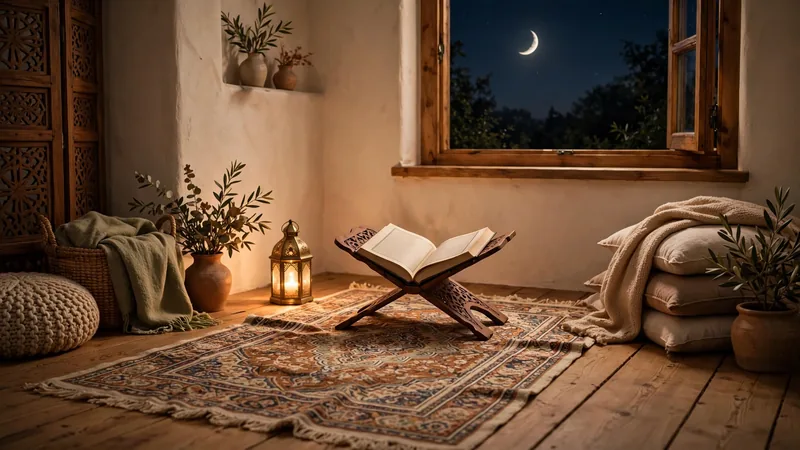
Can I pray taraweeh at home? Yes, absolutely. Praying taraweeh at home is completely valid in Islam, and the Prophet Muhammad himself prayed the Ramadan night prayer at home. Every year, millions of Muslims pray taraweeh at home because of work shifts, young children, illness, distance from the mosque, or safety. This guide explains the rules: when home prayer equals the mosque, when the mosque is better, how to lead your family, and how women can pray taraweeh at home with full confidence.
Is Praying Taraweeh at Home Valid?
Yes, without any doubt. Early in Islam, the Prophet led the night prayer in congregation at the mosque for a few nights of Ramadan, then stopped going and continued praying at home. His reason, as narrated in Sahih al-Bukhari, was that he feared the congregational night prayer would become obligatory on his followers. The companions then prayed taraweeh at home or in small groups for years, until the caliph Umar later organized one large congregation.
This history proves the point: home taraweeh came first, and it was the Prophet's own practice for most of his life. A taraweeh prayed at home with focus counts fully. It is the same prayer, the same rakats, the same reward for the prayer itself. For the full method, see our step-by-step guide to praying taraweeh, which works exactly the same at home as at the mosque.
Can I Pray Taraweeh at Home Instead of the Mosque?
You can, and many scholars say you should pick the option that fits your life. The majority view is that praying taraweeh in congregation at the mosque brings extra reward, because congregational prayer in general carries more reward than praying alone. For men who live near a mosque and have no excuse, attending is the better choice.
But "better" does not mean "home is wrong." The scholar Hasan al-Basri was once asked whether to pray taraweeh at home or at the mosque, and he answered: pray wherever your eyes shed tears and your heart softens most easily. If the mosque's long prayer leaves you exhausted and distracted, while a shorter focused prayer at home brings you to tears, the home prayer may be better for you. Choose the place where your worship is most sincere, not the place that impresses others.
Good Reasons to Pray Taraweeh at Home
Islam is a practical religion, and the scholars list many valid reasons for staying home. Night-shift workers, nurses, and anyone whose job runs through the evening can pray a shorter taraweeh at home after work. Parents of babies and young children often cannot leave the house at night, and mothers in particular find home prayer the only workable option. Elderly Muslims, people with disabilities, and those recovering from illness are excused from the trip to the mosque.
Distance matters too. In many parts of the US, the nearest mosque is a 30-minute drive, and driving back late at night after a long taraweeh is genuinely hard on work nights. Safety concerns, bad weather, and lack of transport are all legitimate reasons. None of these reduce the validity of your prayer. Plan your Ramadan nights with our Ramadan 2027 hub, which lists prayer times and key dates to help you schedule home and mosque nights.
How to Lead Taraweeh for Your Family
Leading taraweeh at home for your family is one of the most rewarding things a Muslim can do in Ramadan, and the rules are simple. The person leading (the imam) stands in front, and everyone else stands behind in rows. If it is just you and your wife, she stands behind you, not beside you. Children stand in the row behind the adults. Women and girls pray in rows behind the men and boys.
Recite out loud, since taraweeh is a night prayer and loud recitation is the Sunnah for it. Keep the recitation short enough that the family can stay focused: a few verses or a short surah per rakat is fine. Pray in sets of two rakats with a short rest between sets, and finish with witr, which you can also lead. If you are unsure whether to pray 8 or 20, our guide on the number of rakats will help you decide. At home, 8 focused rakats as a family beats 20 distracted ones.
Women Praying Taraweeh at Home
A woman's taraweeh at home is fully valid and fully rewarded. The Prophet instructed his followers not to stop women from going to the mosques (narrated in Sahih Muslim), so attending the mosque is allowed, and many US mosques now provide proper women's sections during Ramadan. But staying home is equally fine, and for many women it is the better choice, especially with small children.
A woman can pray taraweeh alone, lead other women (standing in the middle of the row, not in front), or follow her husband or a male relative who leads the family. She follows the same method: wudu, intention, sets of two rakats after Isha, then witr. There is no separate "women's version" of taraweeh. If she misses the odd nights of the last ten, she can still seek Laylat al Qadr at home; see our Laylat al Qadr 2027 guide for the expected dates and dua.
Praying Taraweeh Alone: Practical Tips
Praying alone at home has one big advantage: you set the pace. Pray 8 rakats in about 20 minutes with short surahs, or stretch it longer on nights you feel strong. Most scholars allow reading from the mushaf (a printed Quran) or a phone app while praying alone, which lets you recite longer passages and even complete the whole Quran across Ramadan. Keep the phone on silent and the screen dim so it does not distract you.
Set up a fixed prayer spot with a clean mat, and pray at the same time each night so it becomes a habit. If you feel sleepy, take the Sunnah rest between sets seriously: sit, make dua, drink water. And remember the tahajjud option: you can also wake in the last third of the night for extra prayer. Our guide on how to calculate tahajjud time shows you exactly when that window falls.
Frequently Asked Questions

Check Today's Verified Prayer Times in Your City
Access real-time Fajr, Dhuhr, Asr, Maghrib, and Isha times calibrated with GPS coordinates and ISNA standards across 189+ American cities.