
Why Do Muslims Pray 5 Times a Day? The Purpose of Salat
Discover the spiritual and historical reasons why Muslims pray five times a day. Learn about the Night Journey (Isra and Mi'raj) and the benefits of daily Salat.
Why Do Muslims Pray 5 Times a Day?
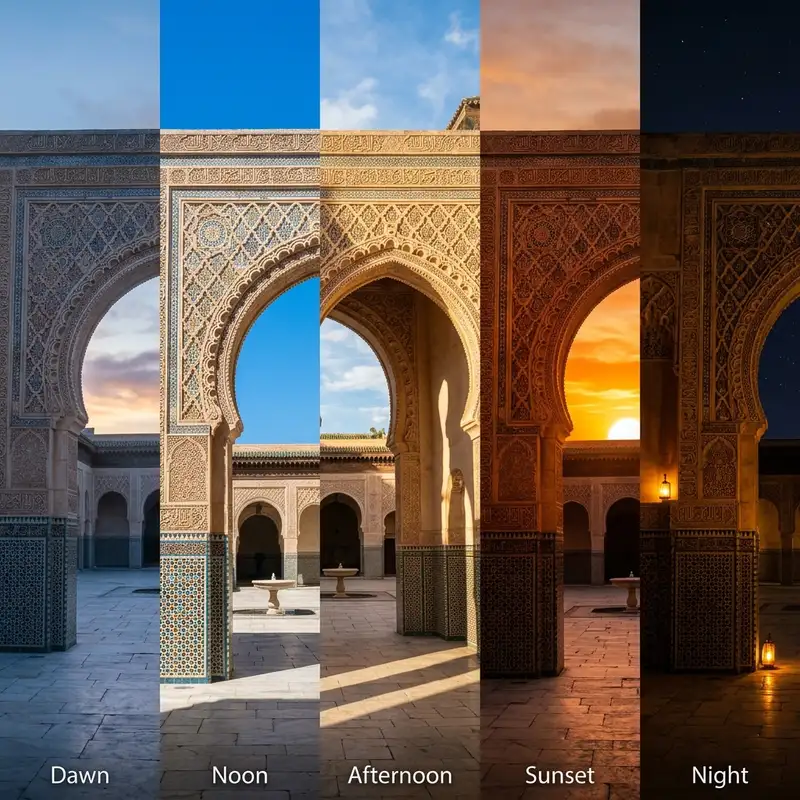
One of the most defining characteristics of a practicing Muslim is the commitment to perform Salat (prayer) five times a day. To an observer, stopping everything—work, school, socializing—multiple times a day to wash and pray might seem incredibly demanding. So why do Muslims do it? What is the significance of the number five?
The answer lies in a miraculous historical event, the psychological benefits of spiritual pacing, and the fundamental purpose of human existence according to Islamic theology.
The Historical Origin: The Night Journey (Isra and Mi'raj)
The obligation of the five daily prayers was not sent down through the Angel Jibril (Gabriel) like the rest of the Quran. Instead, it was commanded directly by Allah during one of the most significant events in Islamic history: The Night Journey (Isra) and Ascension (Mi'raj).
In the year 621 CE, the Prophet Muhammad (PBUH) was miraculously transported from Mecca to Jerusalem, and from there, he ascended through the seven heavens to speak directly with Allah. During this divine meeting, Allah initially prescribed fifty prayers a day for the Muslim Ummah.
On his descent, the Prophet Muhammad met the Prophet Musa (Moses), who warned him that his followers would never be able to handle fifty prayers, based on his own experience with the Children of Israel. Moses urged Muhammad (PBUH) to return and ask Allah for a reduction.
The Prophet Muhammad went back multiple times, and Allah reduced the prayers by five each time, until only five daily prayers remained. Even then, Moses suggested asking for further reduction, but the Prophet Muhammad felt too shy to ask again. Allah then decreed: "They are five [in number], but they are fifty [in reward]."
The Spiritual Anchor of the Day
Beyond history, there is a profound psychological and spiritual wisdom behind praying five times specifically spaced out across the solar day (Fajr at dawn, Dhuhr at midday, Asr in late afternoon, Maghrib at sunset, and Isha at night).
The "Spiritual Wi-Fi": Human beings are naturally forgetful and easily consumed by the material world. If a Muslim only prayed once a day, or once a week (like Sunday mass), the rest of the week could easily be swallowed by worldly distractions, stress, and sin.
The five prayers act as anchors. Just as a phone needs to be plugged in to recharge its battery, a Muslim unplugs from the chaos of the world to reconnect with the Creator, realign their moral compass, and find inner peace.
Washing Away Sins
The Prophet Muhammad (PBUH) used a powerful analogy to explain the benefit of the five daily prayers. He asked his companions:
"If there was a river at the door of anyone of you and he took a bath in it five times a day, would you notice any dirt on him?" They said, "Not a trace of dirt would be left." The Prophet replied, "That is the example of the five prayers with which Allah blots out evil deeds." (Sahih al-Bukhari).
A Universal Timeline
Because the prayer times are tied to the movement of the sun rather than a fixed clock, they force Muslims to remain intimately connected with nature and the cosmos. Waking up before sunrise to pray Fajr builds immense discipline. Taking a break during the peak heat of the day for Dhuhr forces a necessary reset.
In a world of constant notifications, endless work hours, and anxiety, the five daily prayers are a mandatory, meditative pause. They remind a Muslim that while working and living are important, the ultimate return is to Allah.
Related Islamic Guides & Tools
Check Today's Verified Prayer Times in Your City
Access real-time Fajr, Dhuhr, Asr, Maghrib, and Isha times calibrated with GPS coordinates and ISNA standards across 189+ American cities.
Check Today's Verified Prayer Times in Your City
Access real-time Fajr, Dhuhr, Asr, Maghrib, and Isha times calibrated with GPS coordinates and ISNA standards across 189+ American cities.

Check Today's Verified Prayer Times in Your City
Access real-time Fajr, Dhuhr, Asr, Maghrib, and Isha times calibrated with GPS coordinates and ISNA standards across 189+ American cities.