
When Can You Combine Prayers in Islam? Rules for Travel, Rain, Work & Sickness (Jam' Bayn al-Salatayn)
Learn the authentic Islamic rulings on combining Dhuhr with Asr and Maghrib with Isha during travel (Safar), torrential rain, medical surgery, and work constraints.
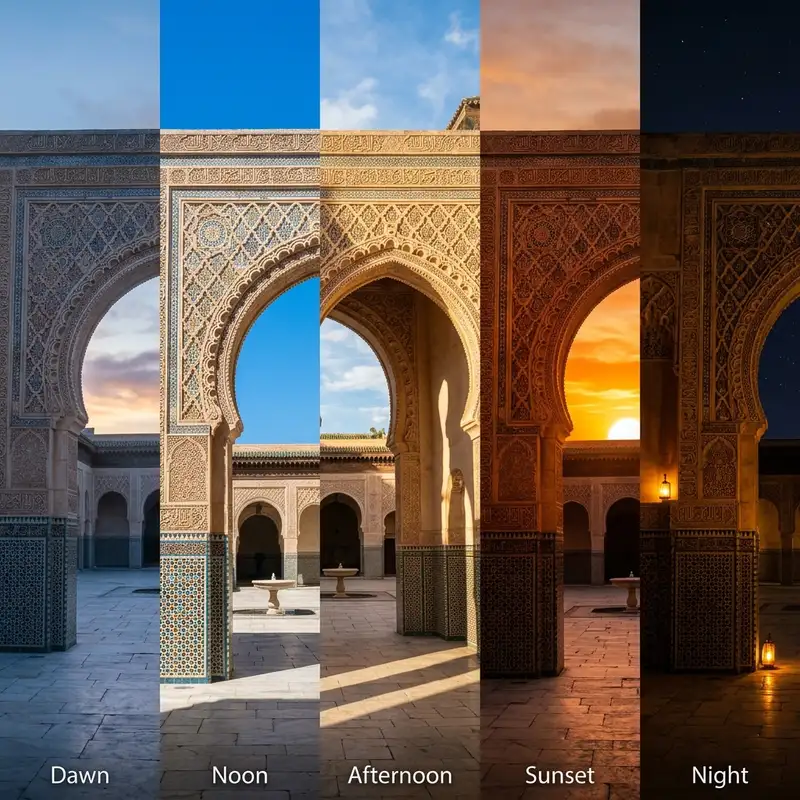
Islam is a religion designed to accommodate human realities. While performing each of the five daily prayers in its specific appointed window is the default obligation, the Shari'ah provides special concessions (Rukhsah) allowing worshippers to combine two prayers together (Jam' Bayn al-Salatayn) under specific circumstances.
1. Which Prayers Can Be Combined?
Under Islamic law, combination is permitted only between adjacent daytime and nighttime pairs:
- Dhuhr and Asr: Can be combined together (either during Dhuhr time or during Asr time).
- Maghrib and Isha: Can be combined together (either during Maghrib time or during Isha time).
- Fajr: CANNOT be combined with any other prayer under any circumstances. It must always be prayed within its distinct dawn window.
- Asr and Maghrib: CANNOT be combined together under any circumstances.
⚠️ Critical Fiqh Ruling: Can You Combine Asr and Maghrib?
One of the most common questions searched by Muslims is: "Can I combine Asr and Maghrib if I am traveling, in school, or stuck in traffic?"
The Answer is Strictly NO. There is unanimous scholarly consensus (Ijma) across all four orthodox Sunni schools of Islamic law (Hanafi, Maliki, Shafi'i, and Hanbali) that Asr and Maghrib can never be combined. Daytime prayers (Dhuhr/Asr) cannot be joined across the sunset boundary with nighttime prayers (Maghrib/Isha).
If sunset approaches and you have not prayed Asr, you must offer your Asr prayer immediately before the sun disappears, and then offer Maghrib once sunset is complete.
2. Permissible vs. Impermissible Prayer Combination Matrix
| Prayer Pair | Can Combine? | Early Window (Taqdim) | Delayed Window (Takhir) | Can Shorten (Qasr)? |
|---|---|---|---|---|
| Fajr + Dhuhr | ❌ Forbidden | No | No | Never |
| Dhuhr + Asr | ✅ Permissible | Pray both in Dhuhr time | Pray both in Asr time | Yes (if traveling >48 mi) |
| Asr + Maghrib | ❌ Forbidden | No | No | Never |
| Maghrib + Isha | ✅ Permissible | Pray both in Maghrib time | Pray both in Isha time | Isha shortened to 2 (Maghrib stays 3) |
3. How to Combine Zuhr and Asr Step-by-Step
Combining Dhuhr and Asr can be done in either of two valid ways depending on your travel or work schedule:
Method A: Jam' Taqdim (Early Combination at Zuhr Time)
If you know you will be in transit or in surgery during Asr time, you perform both prayers during Dhuhr time:
- Wait until the Dhuhr Adhan enters in your city.
- Make the intention (Niyyah) in your heart to pray Dhuhr combined with Asr.
- Perform Dhuhr prayer (4 rak'ahs if resident, or 2 rak'ahs if traveling).
- After saying the final Tasleem (Salam right and left), stand up immediately.
- Make a fresh Iqamah or intention for Asr, and pray Asr (4 rak'ahs if resident, or 2 rak'ahs if traveling).
- Do not place lengthy worldly breaks or non-urgent conversation between the two prayers.
Method B: Jam' Takhir (Delayed Combination at Asr Time)
If you are traveling during Dhuhr and will arrive at a hotel or rest area during Asr time:
- Before Dhuhr time expires, make the conscious intention in your heart to delay Dhuhr to pray it with Asr.
- Once the Asr window enters, pray Dhuhr first (maintaining the sequential order of prayers).
- Immediately stand and pray Asr.
4. Valid Reasons for Combining Prayers
The 4 Recognized Conditions for Jam':
- Travel (Safar): Worshippers traveling beyond approximately 48 miles (77 km) can combine prayers (and shorten 4-rak'ah prayers to 2 rak'ahs as Qasr).
- Severe Weather (Rain, Snow, Ice): Worshippers in the mosque may combine Maghrib and Isha during torrential rain, freezing blizzards, or hazardous ice storms that make returning to the mosque dangerous.
- Illness and Medical Procedures: Patients unable to maintain purity, individuals undergoing dialysis, or surgeons performing extended operations.
- Extreme Hardship (Occasional Work / Academic Emergencies): Based on Ibn Abbas (RA) in Sahih Muslim 705, the Prophet (ﷺ) occasionally combined prayers in Medina without fear or rain to demonstrate that his Ummah should not be subjected to undue hardship.
5. Frequently Asked Questions (FAQ)

Check Today's Verified Prayer Times in Your City
Access real-time Fajr, Dhuhr, Asr, Maghrib, and Isha times calibrated with GPS coordinates and ISNA standards across 189+ American cities.