
Isha Prayer Time: Mecca (Umm al-Qura) vs ISNA Method Explained
Discover why the Isha prayer time differs between the Umm al-Qura method (Mecca) and the ISNA method. Learn how to choose the right schedule for your location.
Isha Prayer Time: Mecca vs ISNA Method
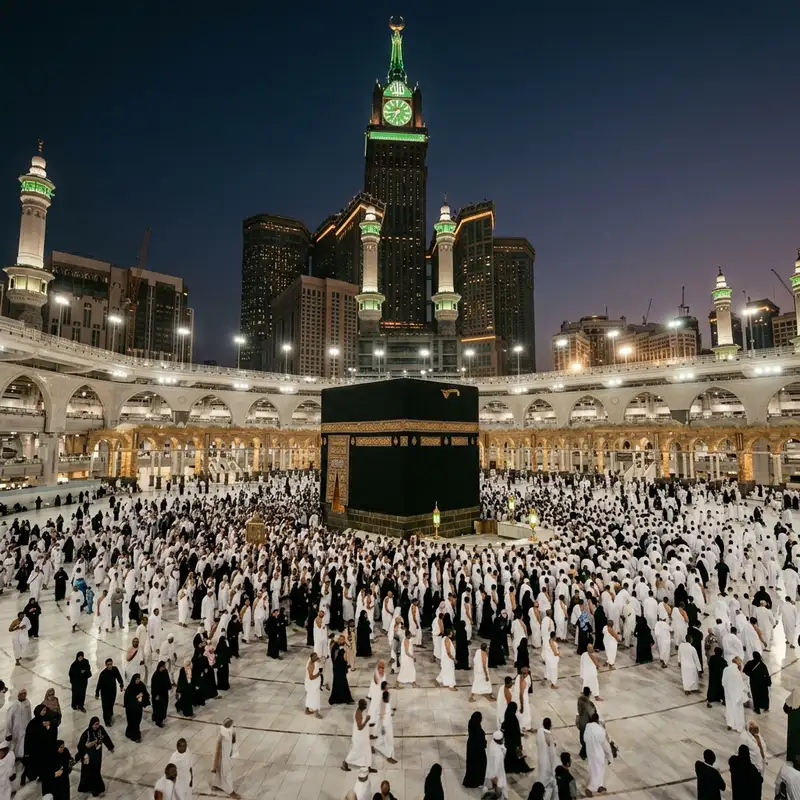
If you've spent any time adjusting the settings on a prayer times app, you've likely noticed that changing the calculation method wildly alters the time for Isha prayer. The two most prominent methods discussed by Muslims in the West are the ISNA (Islamic Society of North America) method and the Umm al-Qura (Mecca) method. But why do they differ, and which one is correct for you?
To understand the difference, we must look at how astronomy, geography, and Islamic jurisprudence intersect.
What Astronomically Triggers Isha?
In Islamic jurisprudence (Fiqh), the time for Isha prayer begins when the red twilight (shafaq) disappears from the western sky. Once the sky is completely black and true night has settled, Isha has entered.
Astronomers measure this transition using the angle of the sun below the horizon. However, the exact angle at which all twilight disappears can vary based on atmospheric pressure, humidity, and, most importantly, latitude.
The ISNA Method (The North American Standard)
The Islamic Society of North America (ISNA) established its calculation method based on astronomical observations taken across the United States and Canada.
The Calculation: ISNA calculates Isha when the sun reaches exactly 15 degrees below the horizon.
Because it relies on a specific solar angle, the gap between Maghrib (sunset) and Isha fluctuates throughout the year. In the winter, the sun drops quickly, so Isha might enter just 70 minutes after Maghrib. In the summer, when twilight lingers in the northern hemisphere, the gap can stretch to nearly 2 hours.
This method is highly accurate for mid-to-high latitudes, which encompasses the vast majority of North America.
The Umm al-Qura Method (The Mecca Standard)
The Umm al-Qura University in Mecca, Saudi Arabia, governs the official prayer timetable for the Arabian Peninsula.
The Calculation: Instead of relying on a variable solar angle for Isha, Umm al-Qura uses a fixed time interval. Isha is calculated as exactly 90 minutes after Maghrib. During the month of Ramadan, this is extended to 120 minutes to allow ample time to eat Iftar before Taraweeh prayers.
Why a fixed interval? Because Saudi Arabia is located relatively close to the equator. Near the equator, the sun sets almost vertically, and the length of twilight barely changes throughout the year. 90 minutes is a very safe and accurate metric for when twilight disappears in Mecca all year round.
The Problem with Using Umm al-Qura in the West:
If you live in New York, Chicago, or London, using the Mecca method can lead to invalid prayers during the summer. In July, twilight can linger for up to 1 hour and 50 minutes in these cities. If you use the fixed 90-minute Mecca rule, you might end up praying Isha while the twilight is still visible—meaning your Isha prayer was performed before its time had actually entered!
Which Method Should You Choose?
Your geographic location should determine your calculation method, not a desire for convenience.
- If you live in the USA or Canada: You should strictly use the ISNA method (or MWL, which uses a safer 17-degree angle). Our city prayer directories default to ISNA to ensure absolute theological accuracy.
- If you live in the Middle East or near the equator: The Umm al-Qura method is perfectly valid and accurate.
Always align your personal prayer app settings with the geographical realities of your location to ensure your obligatory prayers are performed within their prescribed boundaries.
Prayer Times in Cities Mentioned
Check today's verified prayer times for the cities referenced in this guide:
Related Islamic Guides & Tools
Check Today's Verified Prayer Times in Your City
Access real-time Fajr, Dhuhr, Asr, Maghrib, and Isha times calibrated with GPS coordinates and ISNA standards across 189+ American cities.
Check Today's Verified Prayer Times in Your City
Access real-time Fajr, Dhuhr, Asr, Maghrib, and Isha times calibrated with GPS coordinates and ISNA standards across 189+ American cities.

Check Today's Verified Prayer Times in Your City
Access real-time Fajr, Dhuhr, Asr, Maghrib, and Isha times calibrated with GPS coordinates and ISNA standards across 189+ American cities.