
How Are Prayer Times Calculated? (ISNA, MWL & More)
Learn how Islamic prayer times are calculated astronomically. Understand the differences between ISNA, MWL, and Umm Al-Qura calculation methods used in the USA.
How Are Islamic Prayer Times Calculated?
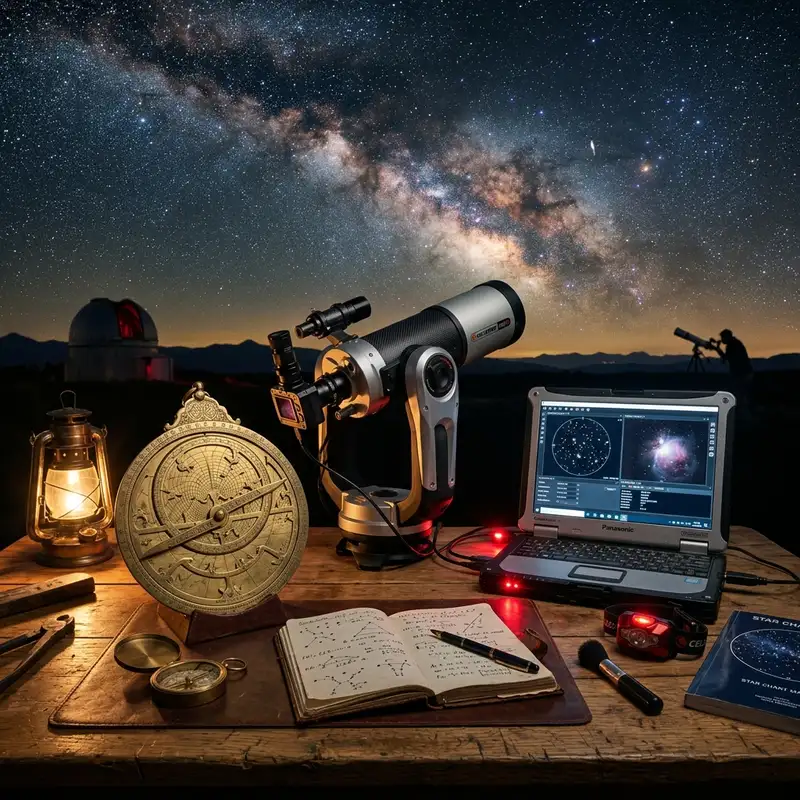
Islamic prayer times are calculated based on the precise astronomical position of the sun. The five daily prayers (Fajr, Dhuhr, Asr, Maghrib, and Isha) correspond to specific solar events: dawn, solar noon, afternoon shadows, sunset, and nightfall.
If you've ever used a prayer times calculator, you might have noticed different options like "ISNA", "MWL", or "Umm Al-Qura". Why are there different methods, and which one should you use? Let's break down the science and geography behind the Adhan schedule.
Quick Summary: In the United States, the ISNA (Islamic Society of North America) method is the standard. It calculates Fajr and Isha when the sun is exactly 15 degrees below the horizon.
The Science Behind the 5 Prayers
To understand the calculation methods, we first need to understand what solar events dictate the prayers. Unlike our modern clocks which divide the day into artificial hours, Islamic timekeeping is organic, tied directly to the earth's rotation relative to the sun.
- Fajr (Dawn): Begins when the true dawn appears (morning twilight) and ends exactly at sunrise. Twilight is a period when the sun is below the horizon but its light is scattered by the upper atmosphere.
- Dhuhr (Midday): Begins immediately after the sun passes its zenith (the highest point in the sky) and begins to decline. This is astronomically known as Solar Noon plus a few minutes.
- Asr (Afternoon): Begins when an object's shadow equals its height (plus the shadow's length at Dhuhr). There are slight variations between Hanafi and Shafi'i schools on this calculation.
- Maghrib (Sunset): Begins exactly when the upper limb of the sun completely disappears below the mathematical horizon. Atmospheric refraction is taken into account here.
- Isha (Night): Begins when the red twilight disappears from the sky entirely, marking true night.
Why Do Calculation Methods Differ?
Calculating Dhuhr, Asr, and Maghrib is relatively straightforward. Astronomers can pinpoint exactly when solar noon and sunset occur down to the second.
However, Fajr and Isha are much more complicated. They rely on determining when "twilight" begins and ends. Visually observing the exact moment the first thread of light appears (Fajr) or the last thread of red light disappears (Isha) is difficult and subjective. Furthermore, twilight looks very different depending on your latitude and the season.
To standardize this, Islamic organizations and observatories convened to establish specific angles of the sun below the horizon that correspond to true dawn and true night. Because different regions have different atmospheric conditions, different organizations settled on slightly different angles.
Major Calculation Methods Explained
1. ISNA (Islamic Society of North America)
Angles: Fajr at 15°, Isha at 15°
This is the default and most accurate method for North America. ISNA determined that for the atmospheric conditions across the US and Canada, 15 degrees below the horizon accurately reflects the visual signs of dawn and nightfall.
2. MWL (Muslim World League)
Angles: Fajr at 18°, Isha at 17°
Used primarily in Europe, the Far East, and parts of the Middle East. It relies on a deeper depression angle, meaning Fajr starts earlier and Isha starts later compared to ISNA.
3. Umm Al-Qura (Makkah)
Angles: Fajr at 18.5°, Isha is fixed at 90 minutes after Maghrib
Used officially in Saudi Arabia and the Arabian Peninsula. Because of the consistent latitude and weather, they fix Isha to exactly 1.5 hours after sunset (extended to 120 minutes during Ramadan to allow for Taraweeh).
4. Egyptian General Authority of Survey
Angles: Fajr at 19.5°, Isha at 17.5°
Used in Africa, Syria, Iraq, Lebanon, and Malaysia. It uses the deepest angle for Fajr (19.5°), meaning Fajr time enters the earliest among all methods.
How Do I Choose a Method?
If you live in the United States, we highly recommend leaving your settings on the ISNA calculation method. The ISNA standard was developed specifically for North American coordinates.
Our USA prayer times tracker defaults to ISNA to ensure your daily salat schedule matches the vast majority of local mosques across America. If you are traveling abroad or follow a specific mosque that adheres to a different standard (like MWL), you can easily adjust the settings in our calculator dropdown menu.
Ultimately, all these methods are scientifically sound approximations endorsed by reputable Islamic scholars. The most important thing is consistency and establishing a routine that prevents you from missing the obligatory prayers.
Related Islamic Guides & Tools
Check Today's Verified Prayer Times in Your City
Access real-time Fajr, Dhuhr, Asr, Maghrib, and Isha times calibrated with GPS coordinates and ISNA standards across 189+ American cities.
Check Today's Verified Prayer Times in Your City
Access real-time Fajr, Dhuhr, Asr, Maghrib, and Isha times calibrated with GPS coordinates and ISNA standards across 189+ American cities.

Check Today's Verified Prayer Times in Your City
Access real-time Fajr, Dhuhr, Asr, Maghrib, and Isha times calibrated with GPS coordinates and ISNA standards across 189+ American cities.